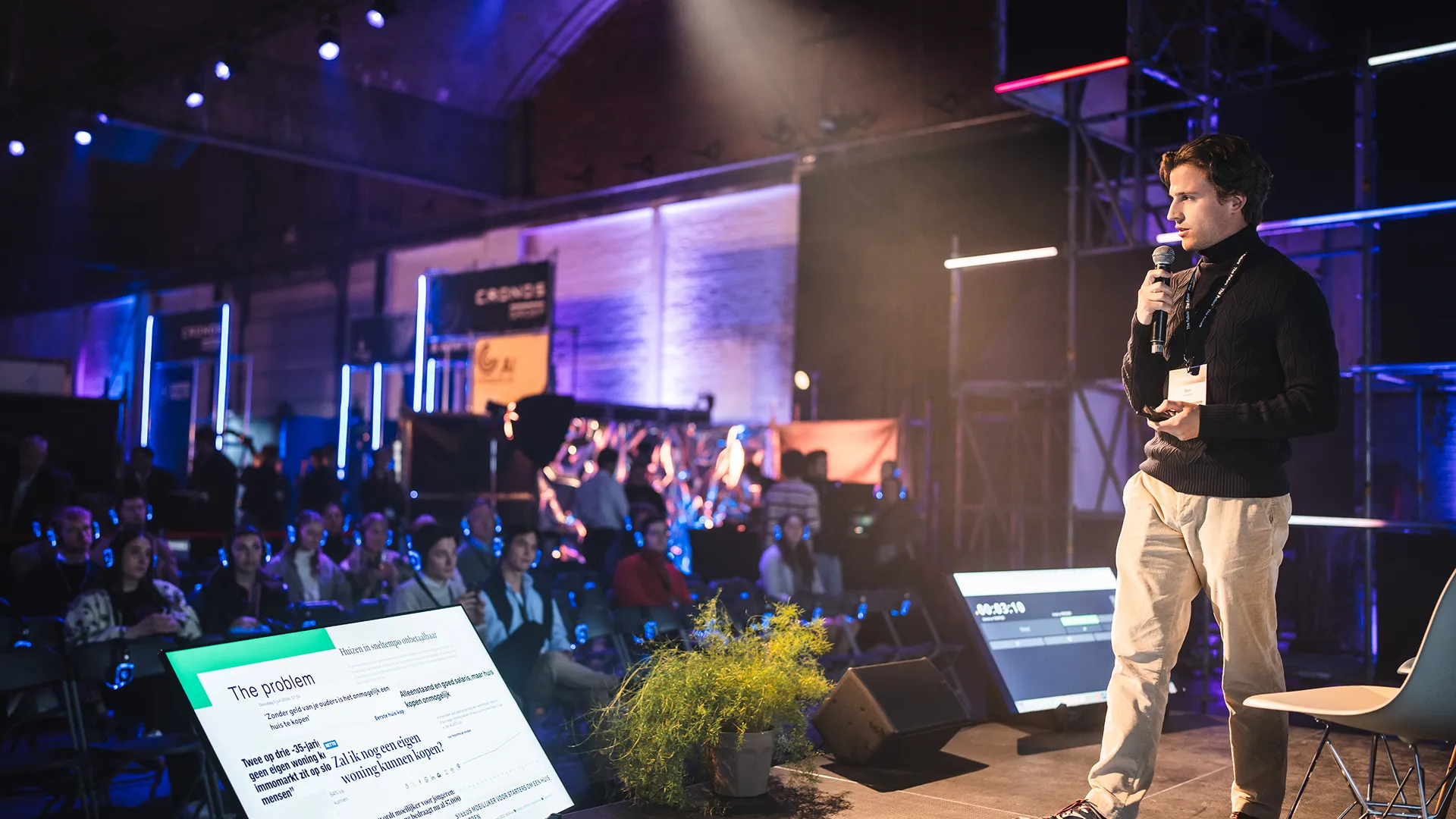
When Arne Malfait pitched Cubby at The Future Five 2025, there was no grand narrative or futuristic promise. Instead, he talked about lockers. The smart kind that were already installed and being used.
That was exactly what made his pitch stand out.
Cubby, the startup that Malfait founded with Robbe De Vilder, develops smart locker systems for nightlife venues, event locations, business centers, and sports halls. It started as a simple way to store things more easily. Over time, it grew into something else: a way to make public spaces easier — and more inviting — to use.
Keep it Practical
Malfait doesn’t see himself as a big visionary. He’d rather spend his time fixing the things that don’t work well yet.
“Usually, access is the problem,” he says. “If something is annoying or complicated, people just won’t bother.”
With that in mind, Cubby’s core product was born: lockers you open with a QR code on your phone. No keys. No coins. No staff needed. Just scan, unlock, and done.
Today, Cubby runs over 1,600 active lockers, spread across locations all over Belgium.
UrbanCubby: Turning Lockers into Playgrounds
Once the locker system proved itself, Malfait started asking a different question: what else could this infrastructure be used for?
The answer became UrbanCubby. Instead of storing personal belongings, these lockers are placed in public spaces and filled with sports and play equipment, things like spikeball sets, badminton rackets, or Kubb.
The first UrbanCubby units were rolled out last summer. “If the gear is there and easy to use, people don’t overthink it,” Malfait says. “They just start playing.”
Using Data Without Overdoing It
Urban Cubby also collects data: what gets used, when, and where. That helps cities and partners understand how their public spaces are actually being used.
Still, Malfait keeps it simple. “The data helps us learn,” he says. “But it’s not the point. What matters is that people are out there, and they’re moving.”
From Product to Pitch: Why Cubby Joined The Future Five
By the time The Future Five came around in March 2025, Cubby was already live. The lockers were installed, UrbanCubby was about to be rolled out in public spaces, and the team had real users interacting with their product. So, why did they sign up for a pitching competition?
Malfait saw it as an opportunity to get their work in front of more people — to connect with potential partners, get feedback, and expand their network.
“The point wasn’t to tell the biggest story or show off,” he says. “We just wanted to let people see what we were actually building.”
Find more information about Cubby on their website: https://cubby.be/
-min.webp)
.svg)


%20(1).webp)